SUPPLY CHAIN Want a reminder of how delicate international trade can be? Look to the Strait of Hormuz, a key Middle East shipping lane that some feared Iran would shut down amid its conflict with Israel and the US. Recent analysis of more than a million supplier locations of 80 major corporations by Marsh-owned supply-chain platform Sentrisk showed nearly all (95%) of the companies had at least one supplier in the region. Most of them are tier three suppliers, meaning they don’t work directly with the buyer and tend to be least visible to organizations. Also noteworthy is that suppliers this far down the supply chain will encounter challenges months before corporate buyers feel the sting, according to Dave Petrucci, managing director at Protiviti. But really, in a time of immense uncertainty, there are ample supply challenges that will spike a CFO’s blood pressure. Look no further than President Donald Trump’s latest tariff threats. CFOs of organizations that don’t have full supply chain visibility—the practice of tracking a product from its origin story all the way to the grand finale, when it reaches the end user’s hands—are flirting with financial disaster. Experts told us that recent global events are evidence of that. International conflict and new trade barriers “have provided a greater push, or emphasis, on this topic,” but well before this, companies have looked to supply chain visibility as a key to “unlocking the right use cases that can drive significant value,” Sameer Anand, who leads EY-Parthenon’s supply chain practice in the Americas, told CFO Brew. For more on building supply chain visibility, click here.—AZ | | |
|
|
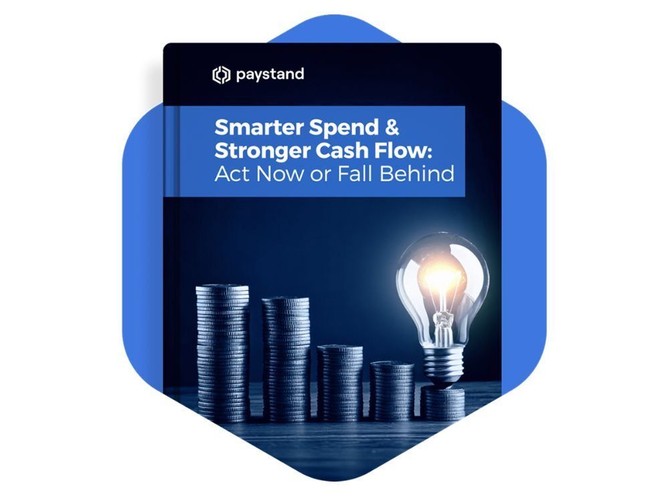
Presented By Paystand You know what time we’re talking about—when your cash flow is doing a little tightrope walk. Meanwhile, the conference invites are rolling in, flights are creeping up in price, and somehow every department is “just checking” if there’s room in the budget for a Q3 offsite. Fortunately, there are two pieces of good news. One: This is the perfect time to smooth out your financial ops before Q3–Q4 kicks into high gear. Two: Paystand made a guide to help you do just that. In it, you’ll find insights about how to: - Cut travel and expense costs (without clipping your team’s wings).
- Align budgets so you’re not playing catchup later.
- Fix payment pitfalls that quietly drag down your revenue cycle.
Grab your copy of the guide and start setting yourself up for the rest of the year. |
|
AUDITING There’s been a lot of commotion at a group that doesn’t normally catch the mainstream spotlight. Erica Y. Williams announced this week that she’s stepping down as chair of the Public Company Accounting Oversight Board, effective Tuesday, July 22. She announced her departure after SEC head Paul Atkins asked that she resign, according to media reports. “With high economic uncertainty increasing the risk of fraud, the PCAOB’s mission is as important as ever,” Williams said in a news release. “It’s critical the expert PCAOB staff continue to be empowered to carry out their work of ensuring American investors are protected.” Williams started her tenure as chair of PCAOB, an independent watchdog that Congress created through the Sarbanes-Oxley Act in 2002 to oversee auditors of public companies, back in January 2022. She was reappointed last year. Williams defended the PCAOB when it was still on the chopping block. “History tells us that when the economy is tight, the risk of fraud goes up. And the stakes are high,” she told the Wall Street Journal this spring. For more on Williams’s departure, click here.—AZ | | |
|
|
EARNINGS In Q1, the big banks brought in record profits from trading as investors, spooked by volatility, rushed to make changes to their portfolios. In Q2, the banks still made, well, bank, though trading was less frenzied. Consumers are hanging in there, bank leaders said during earnings calls, and deals may be returning. JPMorgan Chase, Citigroup, Wells Fargo, Goldman Sachs, and Morgan Stanley all beat analysts’ expectations for both revenue and earnings per share in the most recent quarter. Bank of America was the only major US bank to miss expectations for revenue in Q2; even so, it notched its second-highest top-line revenue ever. Riding the rapids: Q2 kicked off with April 2’s “Liberation Day” tariffs, but within a few weeks’ time, businesses and consumers seemed to adapt, executives said. Ted Pick, CEO of Morgan Stanley, observed, per Reuters, that “the second quarter unfolded with two distinct halves. The first half began with uncertainty and market volatility associated with the US trade policy, and the second half ended with increasing engagement and a steady rebound in capital markets.” Goldman Sachs CEO David Solomon likewise noted in a press release that “[a]t this time, the economy and markets are generally responding positively to the evolving policy environment.” And Citi CFO Mark Mason said that market participants have had “more growing familiarity with how to deal with uncertainty and volatility and the impact of tariffs,” Reuters reported. (TACOs, anyone?) Just how good was the big banks’ quarter?—CV | | |
|
|
Together With Zuora The curious case of internal billing. Many tech companies use a billing system built by their in-house engineers. But at a certain point of business growth, finance needs to grab the reins. In this article, learn how and why finance teams are taking over ownership of order-to-cash processes from engineering. |
|
JOBS CFO Brew readers get early access to high-quality roles curated by CollabWORK. Each one is chosen for its relevance, fit, and impact—no fluff, just opportunities from employers who get it. See more curated jobs by clicking through to the full board. |
|
|
MARKET FORCES Today’s top finance reads. Stat: 11.4%. That’s how much shares were down for ASML, which makes equipment used in chipmaking, after its CEO said the company “cannot confirm” it will grow in 2026. (CNBC) Quote: “It was always going to take a few months to filter into the hard data.”—Tara Sinclair, an economics professor at George Washington University, commenting on the impacts of Trump’s tariffs, which are slowly starting to show themselves in certain corners of the economy. (New York Times) Read: What NYC mayoral candidate Zohran Mamdani had to say to the city’s business elite, on issues like Israel, fiscal policy, and more. (Financial Times) Prepare now: Explore how you can get your financial operations humming before peak season sets in. This guide from Paystand lays out the steps you can take. Check it out.* *A message from our sponsor. |
|
|
SHARE THE BREW Share CFO Brew with your coworkers, acquire free Brew swag, and then make new friends as a result of your fresh Brew swag. We’re saying we’ll give you free stuff and more friends if you share a link. One link. 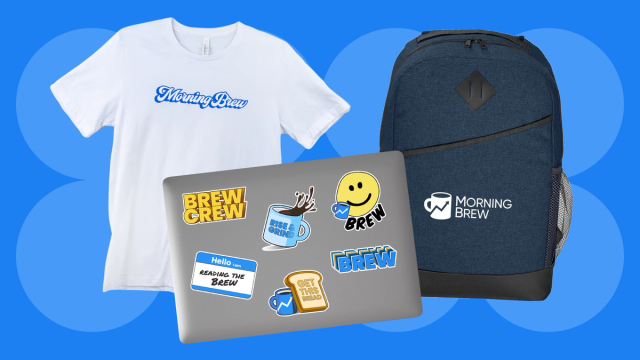 Your referral count: 5 Click to ShareOr copy & paste your referral link to others:
cfobrew.com/r/?kid=9ec4d467 |
|
|
|
ADVERTISE // CAREERS // SHOP // FAQ
Update your email preferences or unsubscribe .
View our privacy policy .
Copyright © 2025 Morning Brew Inc. All rights reserved.
22 W 19th St, 4th Floor, New York, NY 10011 |
|