Hello, and happy Friday already. These four-day weeks are just an emotionally and physically easier lift than a five-day week, wouldn’t you say? If only there was a way to make a shorter week a permanent policy…*cough, cough.* 
In this issue:
 RT-no? RT-no?
 Up and away Up and away
 CAT and mouse CAT and mouse
—Drew Adamek, Courtney Vien, Natasha Piñon
|
|
Celiaosk/Getty Images
RTO, it seems, has become the new WFH. Major tech firms are in the headlines for insisting employees return to the office (RTO, if you’re hip) or face the consequences. Google is checking badge data to see how often staff are on site. Amazon requested employees come to the office three days a week or risk “voluntary resignation.” Even Zoom, in an ironic move worthy of an Alanis Morissette song, wants its employees to return to their cubicles part time.
With RTO so prominent a trend, and with the pandemic in the rearview mirror, C-suite executives may be wondering if it’s time to revisit their remote work policies. But CFOs should handle any such changes with care. Rushed and poorly-implemented RTO policies can backfire, leading to employee dissent and turnover.
They can also damage a company’s reputation, Kaleem Clarkson, COO and co-founder of remote work consultancy Blend Me, told CFO Brew. For instance, he said, when the insurance company Farmers Group insisted employees return to the office, after promising most of them in 2022 that they could stay remote, many were embittered. Some had even moved, assuming they’d be able to work from home indefinitely. “Employees won’t forget” the whiplash from such decisions, Clarkson said, and will be quick to leave once opportunities open up.
Instead of mandating that employees return to in-person work, remote work experts suggest taking a more measured approach to remote work policies—one which addresses leaders’ concerns about productivity and culture while meeting employees’ desire for flexibility.
Click here for more on crafting effective RTO policies.—CV
|
|
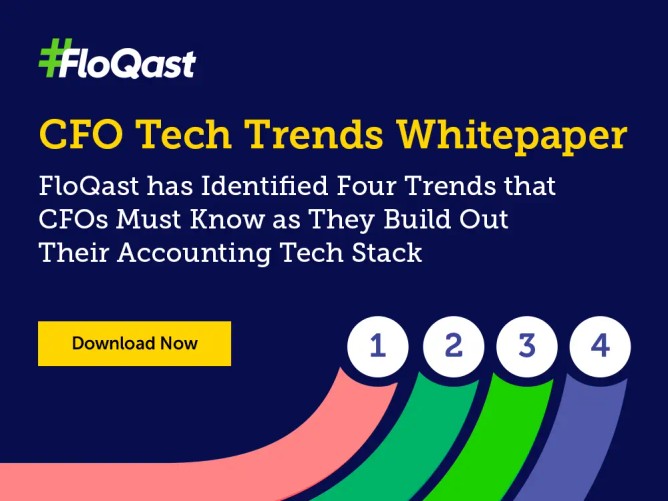
Picture this: You’re leading an all-star team, and all your least favorite manual tasks are automated. Sounds great, right? With the mass adoption of AI and other trending tech, that can be the new norm for the accounting and finance worlds. Get the scoop on the top four need-to-know tech trends for CFOs (and how to use them) in FloQast’s whitepaper.
Want to keep up your org’s growth through the end of the year? It’s time to update your corporate strategy. Keeping up with trendy tech isn’t optional anymore—it’s the key to gaining a competitive advantage.
Financial decision-makers, this one’s for you: FloQast’s whitepaper covers the must-haves in your finance and accounting tech stack, including:
- AI
- cloud computing
- blockchain
- cybersecurity
Get the whitepaper.
|
|
John Lund/Getty Images
CFOs are balancing growth with caution in 2023, the McKinsey Global Survey on the role of the CFO finds. Managing financial risk was the area the greatest percentage of respondents (38%) said they spent most time on in the past year. But it was closely followed by identifying opportunities for growth (29%), building finance capabilities (27%), and managing costs and productivity (27%).
In the year ahead, the highest percentage of CFOs (55%) said that business building was the strategy they most expected their companies to pursue.
Though the cost of capital is high, the survey reveals “an increasing risk appetite, with many CFOs actively steering their boards toward bold M&A and business-building endeavors,” McKinsey partner Christian Grube commented.
Click here for more about what CFOs are saying about 2023.—CV
|
|
Yutthana Gaetgeaw/Getty Images
Let us have this one: CAT’s out of the bag.
The Securities and Exchange Commission approved a funding proposal for the Consolidated Audit Trail (CAT), a database designed to allow regulators to monitor all activity and trades in the US equity market.
Up until now, regulators “lacked a consolidated view of the material information” of National Market System securities “to trace orders from originations, modifications, cancellations, routings, and executions,” according to SEC Chair Gary Gensler, who supported the proposal.
With the new proposal, though, brokers will largely be footing the bill. So, while the plan was approved by three of the five commissioners, it’ll face an uphill battle to win approval from broker and asset manager-adjacent trade groups.
Why it’s happening. Like the clunky iPod that’s entertaining dust bunnies in your closet somewhere, the CAT is firmly a product of the 2010s.
Following the “flash crash” of 2010, when hundreds of billions of dollars were scrubbed from big-name share prices in just minutes, the SEC initially adopted the CAT in 2012. Under the CAT, or Rule 613, national securities exchanges are required “to provide certain detailed information to a newly created central repository” so the SEC can “create, implement and maintain a consolidated audit trail.”
Click here to see how CAT may work in practice.—NP
|
|
|
Grace under pressure. With so many new Private Equity industry regulations, the heat is on for private market reporting. Learn how automation is turning that stress into success in a chat with Workiva’s Arthy Kumar. The podcast with PEI Media explores how investment companies are regaining control of and issuing their financial data. Listen here.
|
|
Francis Scialabba
Today’s top finance reads.
Stat: $19 billion. That’s T-Mobile’s newly announced shareholder return program. The shareholder returns will come in dividends and stock buybacks through 2024. (Reuters)
Quote: “GM either doesn’t care or isn’t listening when we say we need economic justice at GM by 11:59pm on September 14th. The clock is ticking. Stop wasting our members’ time. Tick tock.”—United Auto Workers president Shawn Fain reacting to GM’s latest four-year wage increase offer in ongoing labor negotiations between the automaker and the union. (CNBC)
Read: This company is successfully leveraging data to retain employees. (HR Brew)
Automate to accelerate: Goodbye long processing times, hello touchless invoicing. Basware’s ebook explores how AI and machine learning can transform your invoicing process end to end—and how you can free up your AP team. Get it here.*
Tune in: Get all the tech stack deets for your accounting needs at CFO Brew’s virtual event on Sept. 28, sponsored by Xero. Register for free.*
*A message from our sponsors.
|
|
Are you an exec looking to make your next career move or join a board of directors? We’ve partnered with ExecThread, where you can find thousands of confidential job opportunities and board roles that aren’t listed anywhere else. Check out positions like:
|
|
|