Outside hire
To:Brew Readers
CFO Brew // Morning Brew // Update
More companies are hiring external CFO candidates.

Hello, and welcome back from the holiday weekend. Now that remote and hybrid work are a permanent thing, what’s the fashion rule for sweatpants after Labor Day?

In this issue:

Looking around

Talking the talk

Costly diagnosis

Drew Adamek, Alex Zank, Cassie McGrath

CFOS

CFO hiring turnover

Gocmen/Getty Images

Hunting for a new CFO role? Time to get outside.

Companies are hiring more outside CFO candidates than they have in the last decade, according to Crist Kolder’s latest Volatility Report on executive turnover.

Among the 671 companies in the Fortune 500 and S&P 500, 44% of those hiring a new CFO in 2024 ultimately tapped someone from outside their organization, according to the report. This is above the 39% historical average going back to 2014, and tops the previous high mark of 43.4% back in 2017.

More than one in 10 (11.2%) of companies have undergone CFO turnover so far this year, Crist Kolder found.

The changing nature of the CFO role also means more finance chiefs are moving into the office of the CEO, according to Clem Johnson, president of Crist Kolder. This fact was a headline finding of Crist Kolder’s previous report. CFO-to-CEO promotions actually decreased in the first half of 2024, with 7.1% of sitting CEOs coming from the CFO chair (vs. 8.4% in 2023), “but [are] trending upward overall,” according to the report.

“The broad mandates of modern CFOs have given rise to historically high rates of CEOs who were once CFOs,” Johnson said in a news release. “This trend cranks the flywheel faster, and, sure enough, average CFO tenure has decreased to just 4.7 years. The only constant is more change, so executives who demonstrate an ability to lead through ambiguity will continue to be in high demand.”

For more on who is getting hired as CFO, click here.AZ

PRESENTED BY BILL

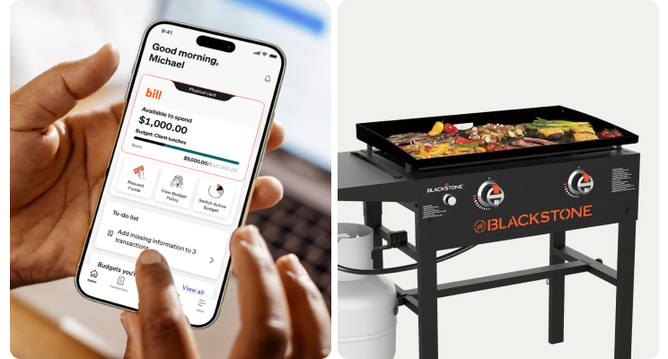
What, you ask, does sizzlin’ BBQ possibly have to do with getting one’s financial operations in order? It’s actually pretty simple. Take a demo with BILL Spend & Expense, and they’ll give you a free 28-inch Blackstone Omnivore Griddle.

See? Simple. And delicious.

BILL Spend & Expense can help you automate expense reports, set budgets across teams, and get real-time insights into company spend. Take control of your company $$$ and your next barbecue.

Grab your demo—and griddle.

RISK MANAGEMENT

Speak your truth

Champpixs/Getty Images

Getting executives to talk about risk management can be like convincing little ones to eat their vegetables. The key—according to Mark Beasley, a professor at the Poole College of Management at North Carolina State University and director of its enterprise risk management initiative—is to frame risk in the context of strategy discussion.

Beasley, who recently spoke with CFO Brew about AICPA’s newest State of Risk Oversight Report, of which he is a coauthor, also shared insight on how to get the C-suite thinking more proactively about risk. (Beasley also discussed the growing pressure for leaders to be more involved in risk oversight and how to better monitor risks on management dashboards.)

This interview has been edited for length and clarity.

What are some key steps that companies can take to be more proactive in tying risk management in with strategic planning?

My observation is, so many executives, when they talk about strategies…they don’t really want to go through and say, “Well, what must go right, and what could emerge and derail that?”...They may be making some assumptions underlying the strategy, but they don’t recognize they’ve made an assumption. The example I like to give—which is getting dated, but it resonates—if you go back to 2006–2007 and look at what was happening in financial services, a lot of those business models were based on products that, [an] underlying key factor was real estate prices would stay stable or go up. I think in a lot of cases, it was treated as a fact…Well, we now know it was not a fact; it was an assumption that was really bad.

Click here to continue reading.—AZ

CYBERSECURITY

Healthcare symbols over a red binary background

Francis Scialabba

Cyberattacks are causing issues across all sorts of industries, from Microsoft to AT&T to Ascension. But it looks like the healthcare industry is getting hit the hardest—financially, at least.

The 2024 Cost of a Data Breach Report from IBM and think tank Ponemon Institute found that the global average cost of a data breach rose 10% between March 2023 and February 2024, reaching a total average cost of $4.88 million in that period. Costs for disruptions to business processes and post-breach customer support and remediation were the largest drivers behind the increase.

However, of the 17 industries studied, healthcare had the most expensive data breaches, with an average cost of $9.77 million during that same period. In fact, healthcare has held the No. 1 spot for costliest breaches since 2011, according to the study.

For comparison, the next highest average cost was in finance, at $6.08 million.

Give me a breach break. Healthcare data breaches are becoming more common: The Department of Health and Human Services’s Office for Civil Rights (OCR) reported a 239% increase in “hacking-related data breaches” between January 2018 and September 2023, and it also reported a 278% increase in ransomware attacks over that time, according to the HIPAA Journal, which tracks the data.

Click here to continue reading Healthcare Brew’s story on the cost of cyberattacks.CM

TOGETHER WITH AVIDXCHANGE

AI AP. Wanna automate invoice entry, PO matching, workflow automation, and anomaly detection? You’re in luck. AvidXchange products can help you do just that and more. Get their Ultimate Guide to AI in Finance to learn how AP automation solutions can help your finance department build efficiencies and streamline processes.

MARKET FORCES

market forces chart

Francis Scialabba

Today’s top finance reads.

Stat: $1 trillion. That’s how much Berkshire Hathaway is now worth. The Warren Buffet-led company is the first outside of tech to join the trillion-dollar club, joining behemoths like Apple, Amazon, and Microsoft. (the Washington Post)

Quote: “On milk and eggs, retail inflation has been significantly higher than cost inflation.”—Andy Groff, grocer Kroger’s senior director for pricing, in a March email that was introduced during a hearing on the Federal Trade Commission’s effort to block the merger between Kroger and Albertsons. (Business Insider)

Read: H&R Block’s CFO is retiring at 49, and we’re not envious at all. 🫤 (the Wall Street Journal)

Bills and buns: Take a demo with BILL Spend & Expense to learn how you can automate expense reports and get real-time insights into company spend. In return, they’ll give you a 28-inch Blackstone Omnivore Griddle.*

*A message from our sponsor.

JOBS

Elevate your job search beyond the traditional channels. CollabWORK is where employers seek qualified candidates through trusted community-based referrals. Let the power of community work for you, and click here to browse jobs curated especially for CFO Brew readers.

SHARE THE BREW

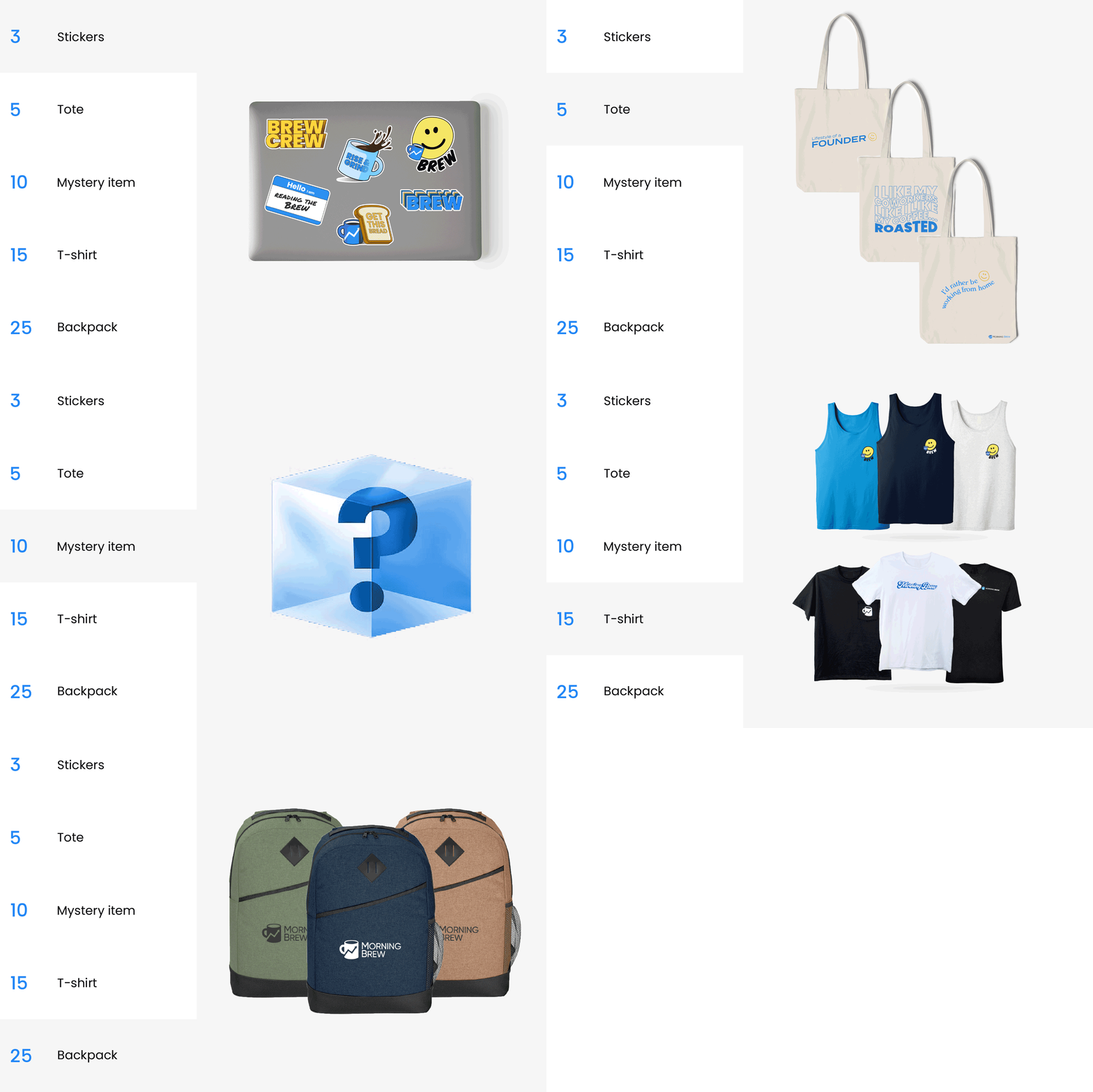
Share CFO Brew with your coworkers, acquire free Brew swag, and then make new friends as a result of your fresh Brew swag.

We’re saying we’ll give you free stuff and more friends if you share a link. One link.

Your referral count: 5

Click to Share

Or copy & paste your referral link to others:
cfobrew.com/r/?kid=9ec4d467

         
ADVERTISE // CAREERS // SHOP // FAQ

Update your email preferences or unsubscribe here.
View our privacy policy here.

Copyright © 2025 Morning Brew Inc. All rights reserved.
22 W 19th St, 4th Floor, New York, NY 10011

News built for finance pros

CFO Brew helps finance pros navigate their roles with insights into risk management, compliance, and strategy through our newsletter, virtual events, and digital guides.

By subscribing, you accept our Terms & Privacy Policy.

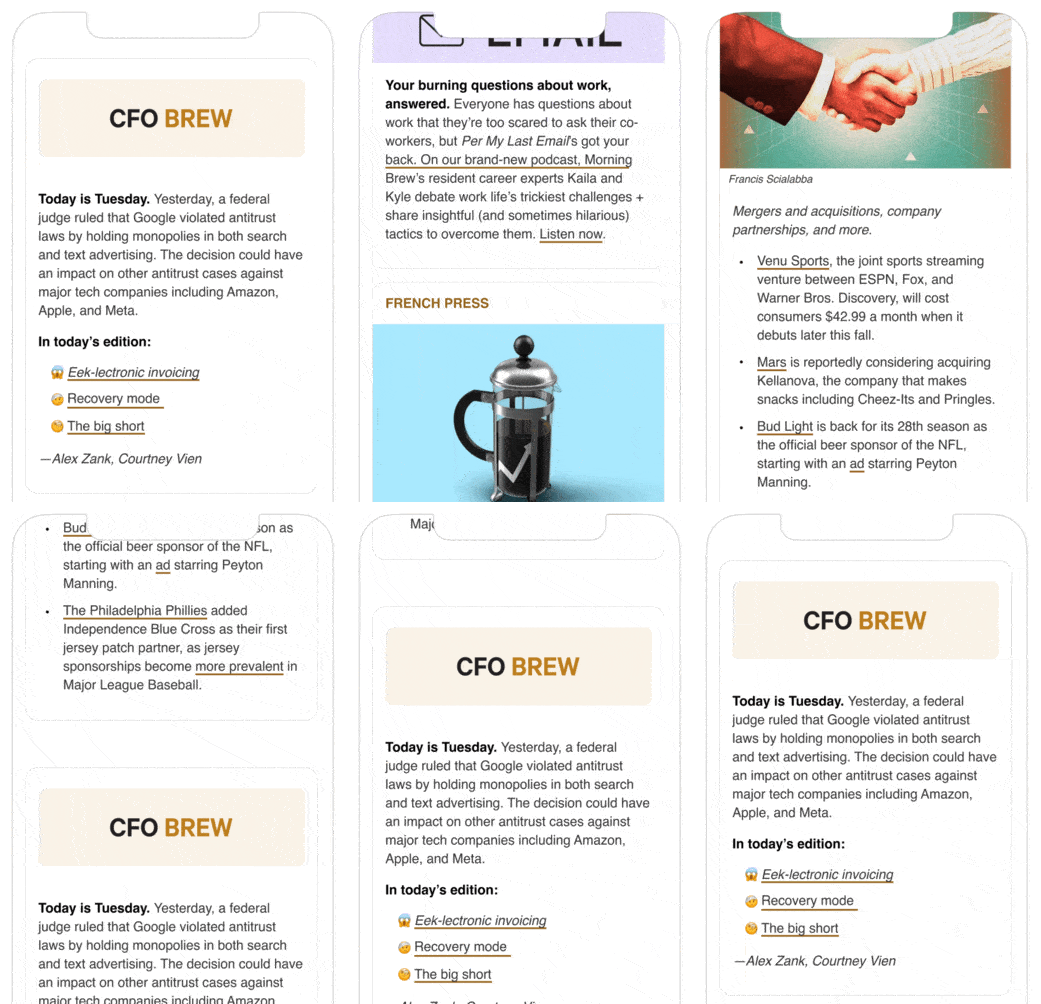
A mobile phone scrolling a newsletter issue of CFO Brew