Hello and welcome to the last Monday in August! The path to becoming a CFO isn’t as straightforward as it used to be (less yellow brick road and more journey to Mordor). If you want to be a CFO, which is the right path for you? Join us at CFO Brew’s virtual launch event on 9/14 at noon ET, sponsored by Oracle NetSuite, as we sit down with Andrew E. Page, EVP and CFO of Foot Locker, Inc., to gain insight on what he wished he’d known starting out, and the traits he thinks are most important for a CFO in 2022 and beyond. Sign up here.
In this issue:
 Prosecuting CFOs Prosecuting CFOs
 Talent wars Talent wars
 Coworking Coworking
—Kim Lyons, Drew Adamek, Kristen Talman
|
|
Stephanie Keith/Getty Images
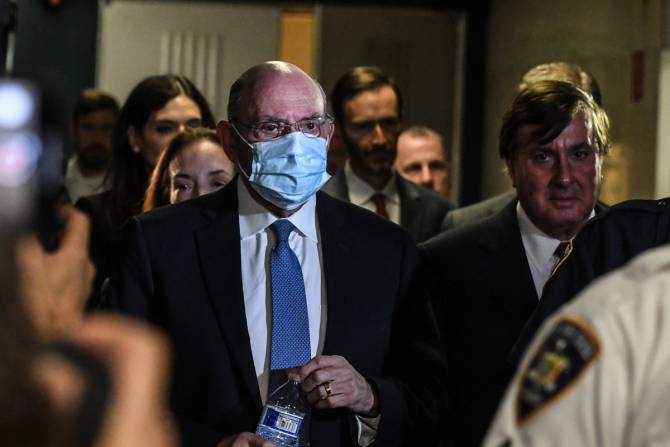
The plea deal between former Trump Organization CFO Allen Weisselberg and the Department of Justice was shocking, not just because of the people involved, but because such cases against chief financial officers at that level are still relatively rare. Weisselberg pleaded guilty to raking in ~$1.7 million worth of untaxed extras in his role at former president Donald Trump’s conglomerate.
But prosecutions of white-collar crime may start to become more common: US Attorney General Merrick Garland said earlier this year that “the prosecution of corporate crime is a Justice Department priority.” And while CFOs can be challenging to prosecute since they’re typically well-insulated and often less involved in small, day-to-day transactions, the DOJ has increased staff to investigate and prosecute the growth in corporate fraud.
“We want to hold individuals accountable,” Jason Linder, a former senior federal prosecutor, and co-chair of Mayer Brown’s Anti-Corruption and Foreign Corrupt Practices Act (FCPA) practice, told CFO Brew. “It is the most effective deterrent to criminal misconduct. Companies getting shaken down for money—eh, that’s a lot of money, that sucks. Those ending up in handcuffs and in prison will deter the next generation of CFOs from thinking about committing the same kind of conduct.”
The staffing needed to investigate, gather evidence, and prosecute cases is significantly greater than in many criminal cases, US Attorney of the Western District of Arkansas David Clay Fowlkes told CFO Brew. “[The] rule of thumb is for every day in court, it requires seven days of preparation,” he said. Continue reading here.—KT
|
|
TOGETHER WITH ORACLE NETSUITE
|
|
What do the most successful CFOs have up their sleeves? The right technical and behavioral skill sets to lead their biz—that’s what.
While financial discipline remains central, today’s CFOs take on way more responsibility than their predecessors. They play important roles in developing strategy, fostering innovation, and driving growth.
To outline exactly what makes a modern-day CFO effective in their increasingly important role, Oracle NetSuite penned this business guide: 5 Key Practices of Highly Effective CFOs.
It showcases the habits that successful CFOs maintain in order to meet—and exceed—the demands of their ever-evolving jobs. And if you wanna grow in yours, you might wanna give it a look-see.
Read it here.
|
|
Onyxprj/Getty Images
The war for finance and accounting talent is brutal for everyone, but public companies are having a significantly tougher time than private companies, according to a recent survey of 1,200+ hiring managers by Deloitte’s Center for Controllership.
The numbers are rough for public companies, with 82.4% of the public firms surveyed saying that “talent-retention issues among corporate finance pros is a big deal” and 83.2% responding that they are “challenged in attracting” talent according to the survey.
“You’ve got the vast majority of both public and private companies saying they expect to have to work hard to attract and retain talent, and that is going to be a challenge as they look at the year ahead,” said Matt Hurley, a partner with Deloitte Risk and Financial Advisory at Deloitte and Touche.
For private companies, the situation isn’t quite as tough (but it ain’t easy either), with 68.9% saying that retention is an issue and 73.7% reporting that attracting talent is challenging.
While all of this might be a bummer for hiring managers, there is some good news for the finance professionals themselves. The survey found that among finance talent leaving a public organization, 57.9% did so for higher pay and for the private companies, 46.2% left for more money.
And it looks like qualified finance professionals will continue to be in high demand over the next year, as the survey found that increasing workloads, a demand for more technological skills, and overall attrition are the key drivers for hiring in the next 12 months.
But you can’t be any mope off the street. Companies, both private and public, are looking for well-rounded talent with a wide range of skills to address their talent needs.
“There is a need now for accounting and finance professionals to know more than just technical accounting, technical finance skills—it’s more than debits and credits,” Hurley said. “It’s finding those people that have that deep knowledge of accounting and finance but also strong technology acumen to meet the changing needs of the organization.”—DA
|
|
TOGETHER WITH ORACLE NETSUITE
|
|
What you need to know as CFO: Back in the day, CFOs were responsible for maintaining financial records and ensuring accounting compliance. But today’s CFO’s job is broader—and maybe even more crucial. Read Oracle NetSuite’s business guide, 5 Key Practices of Highly Effective CFOs, to find out what makes modern-day CFOs successful.
|
|
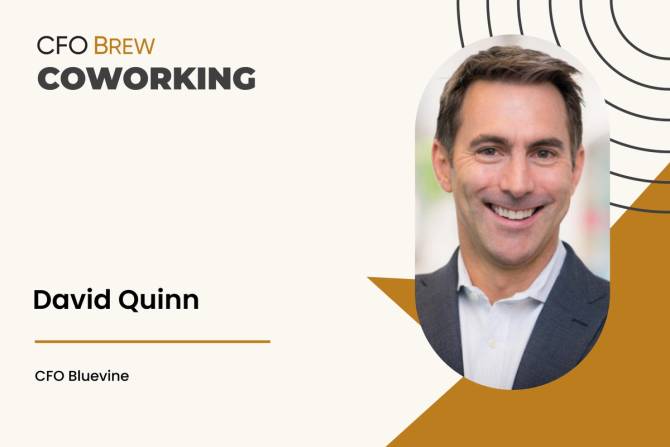
Coworking is a weekly segment where we talk to CFOs and others in the finance space about their experiences, their companies, and the larger economy. Let us know if you are—or you know—a CFO we should interview.
David Quinn is CFO of Bluevine, a fintech company that offers online banking and financing solutions for small- and medium-sized businesses. He has more than 20 years of experience in the finance space, and is a founding member of The F Suite, an invitation-only peer community of CFOs who share best practices.
How did you come to work at Bluevine, and why did you think that the CFO role there was a fit for you?
Really what was attractive about Bluevine is: one, that the mission is very focused on small businesses. And [two], 99% of the jobs in the US are coming out of small businesses; it’s just such a hugely impactful area.
What are you hearing from Bluevine clients or from small businesses that you’re working with—what are their top concerns at the moment?
It looks like the core fundamentals of the economy are still performing really well. You’ve got this specter of recession, which depends on which measures you take. Some say we’re already in a recession, but with this level of low unemployment and low rates, we’re not exactly there yet. Continue reading here.—KL
|
|
Francis Scialabba
Stat: $1.2 billion. That’s how much Peloton, the connected fitness-equipment company, lost in the most recent quarter, as it continues its post-pandemic restructuring efforts. (the Wall Street Journal)
Quote: “But to expect logic and decency from a large corporation in America is an act of folly.”—Lillian Allen, a barista at a Starbucks in Austin, Texas, which is trying to unionize. (Vox)
Read: An office bromance is cut short after one squash partner wears a wire and blows the whistle on the other. (Bloomberg)
|
|
-
Citigroup, the US bank with the largest presence in Russia, said it will close its consumer and commercial banking businesses there beginning this quarter.
-
Tesla has filed a cease-and-desist order against safety engineer Dan O’Dowd and The Dawn Project, which ran ads showing its vehicles running over child-sized mannequins.
-
Amazon is closing its Amazon Care telehealth service, following its $3.9 billion acquisition of One Medical in July.
-
Dollar Tree and Dollar General, the two largest dollar store chains in the US, both reported an increase in sales for the most recent quarter.
|
|
Last week, we asked you what you thought of President Biden’s plan to cancel some student loan debt, which forgives up to $20,000 for some borrowers. Here are the results, courtesy of 1,995 CFO Brew readers:
- 21% said it was a good plan.
- 64% said it was a bad plan.
- And 16% said the plan didn’t go far enough.
|
|
Catch up on top CFO Brew stories from the recent past:
|
|
|