|
Hello, and welcome to Monday. Does anyone else feel like the recent economic data is inducing whiplash, because one minute it seems like we’re headed for a soft landing and the next, the bottom is about to fall out of the economy?  
In this issue:
 Best laid plans Best laid plans
 Flight delay Flight delay
 Giant growth Giant growth
—Drew Adamek, Alex Zank, Courtney Vien
|
|
Credit: Anadolu/Getty Images
|
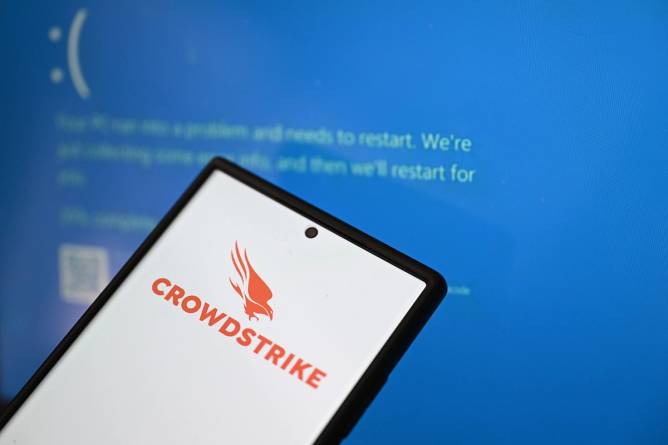
The year’s biggest IT disruption so far did not, in fact, come from a mustache-twirling ransomware supervillain, but a “botched update” from cybersecurity firm CrowdStrike. The resulting global Microsoft Windows outage disrupted businesses of all sorts, including critical services like airlines and hospitals, the New York Times reported.
Now that the dust has mostly settled (the troubles for some organizations, such as Delta, lingered), experts spoke with CFO Brew about the lessons finance leaders should take away from the outage. The outage, they explained, highlights the need for serious business continuity planning and underscored the growing importance of the CIO-CTO relationship.
Jennifer Elder, who’s an expert at contemplating all the disruptive events that a business may experience, told CFO Brew, “My first thought was, ‘I’m surprised this hasn’t happened already.’”
“We have all become so dependent on technology that it’s become almost like air or water,” Elder, who is CEO of The Sustainable CFO and coauthor of Faster Disaster Recovery, said. “We just assume it’s going to be there and [have] forgotten about redundant systems.”
Expect the worst. Elder said the CrowdStrike outage served as an IT risk wake-up call for organizations, the same way the Covid-19 pandemic did with the delicate global supply chains.
For Alexander Bant, chief of research for CFOs at Gartner, the CrowdStrike outage highlighted the growing need for CFOs to rethink their relationship with tech leaders in their organization—namely, the chief information officer (CIO).
For more on dealing with disaster, click here.—AZ
|
|
|
Streamlining your cash apps does more than just help your org process payments faster + with fewer errors. It can also help you streamline your savings.
Versapay’s Cash Application automation solution uses AI and machine learning to help get stuff done comprehensively *and* quickly.
They’ve even got the Total Economic ImpactTM (TEI) commissioned study to prove it. The TEI study conducted by Forrester Consulting for Versapay shows how a composite organization of customers used this solution to increase efficiency by 69% and achieve 138% ROI.
Grab a copy of the study to see how the Cash Application solution can pay for itself by helping:
- Streamline cash processing, boosting efficiency by 69%.
- Achieve 138% ROI.
- Improve days sales outstanding (DSO) from 125 days to 99 days, decreasing the need for external financing.
Dive into the study for more.
|
|
Andrew Harnik/Getty Images
|
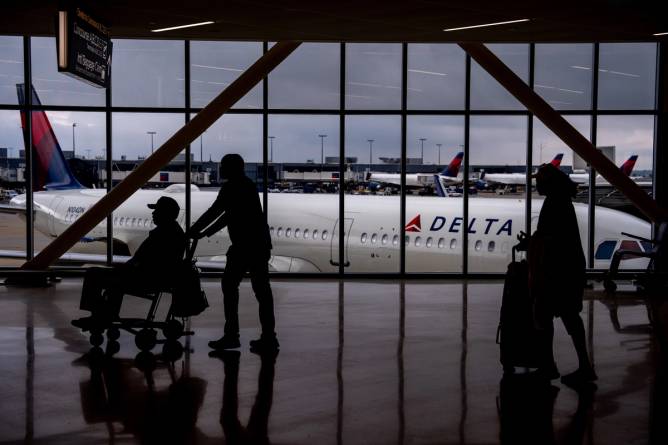
The CrowdStrike outage hit Delta right where it hurts—the pocketbook.
Ed Bastian, Delta’s chief executive, said the July 19 global IT outage will cost the airline $500 million, CNBC reported. That figure includes lost revenue and costs Delta incurred to compensate stranded customers and put them up in hotels, according to Bastian.
“It was terrible,” Bastian said, describing the outage and fallout to CNBC in an interview. “Apologies again to our customers, our people…It was just a really, really tough situation.”
Even with its systems back online, Delta’s troubles appear to be far from over. The Department of Transportation announced it has opened an investigation “to ensure they comply with our passenger protection laws.”
Delta has hired a law firm “to seek damages from…CrowdStrike and Microsoft,” according to CNN. Microsoft’s systems also short-circuited during the IT disruption. “We have no choice” but to sue the companies, Bastian told CNBC.
Not all airlines were as deeply affected by the outage as Delta. For instance, David Seymour, COO of American Airlines, said during a recent earnings call that his company was back to normal by the end of the day on July 19.
For more on Delta's no good, very bad days, click here.—AZ
|
|
Vijay Padmanabhan
|
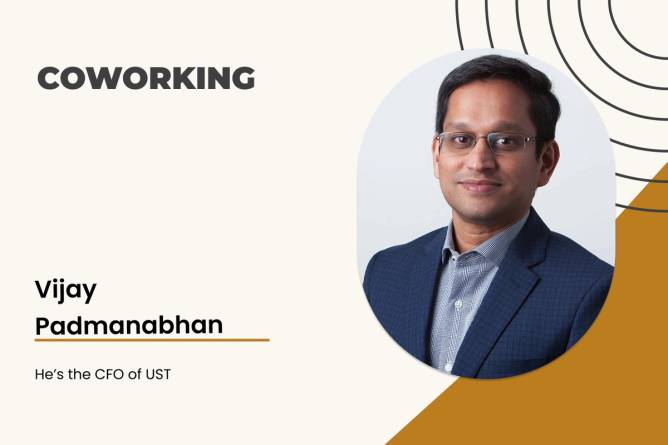
Global digital technology and IT services giant UST employs 30,000+ people in more than 30 countries. But it began as a startup with just one two-room office in California and a second location in India. Its CFO, Vijay Padmanabhan, who has been with UST from the beginning, spoke with CFO Brew about his role and what he’s most proud of.
This interview has been edited for clarity and length.
You’ve been with UST from the beginning. How did you originally start working there?
I started in 2000. I joined when we were a startup. I had the good fortune to move to the US and work from our headquarters. It was a small, two-room office in Aliso Viejo [California] when I initially joined, and the good part for me was that I got to work directly with the CEO. And then we grew…and I was able to see the journey from zero to $2 billion, how the decision making happens, how the business works, being next to the nerve center.
I had a good exposure across various [areas]. At a startup, you do everything; you do the accounts payable, receivables, payroll. After the first five or six years, I slowly moved more into the business-facing roles, like business finance and financial planning and analysis, and I enjoyed it, because you are always working with the business leaders. And that, to me, was way more interesting—to be part of a team that is influencing sales or winning deals and then subsequently making sure that you’re able to meet the committed margins and all the margin improvement steps…My role was never a back office type of a role. It was always in the front with the business, working closely with the CEO and CFO through my career.
For more on creating employee longevity, click here.—CV
|
|
|
Redefining your role. Today’s high-impact CFOs are expanding their influence beyond finance. They’re embracing AI, fostering more cross-functional collaboration, and creating work-life balance for themselves. Sage’s latest research report explains how you can do the same. It’s got data-driven insights + tangible advice for expanding your impact. Check it out.
|
|
Level up your career with these resources from our sponsors!
|
|
CFI
|
Join CFI today to power your career with essential corporate finance skills. Gain access to expert-led finance and banking training and productivity tools to advance your skills. Get started today with the special CFO Brew discount to save 40%. Join today!
|
|
Francis Scialabba
Today’s top finance reads.
Stat: $900 billion. That’s the potential market value loss of the Magnificent Seven tech companies as investors shed tech stocks. The selloff comes as investors are looking for safer bets in the event of a recession. (Reuters)
Quote: “Should Delta pursue this path, Delta will have to explain to the public, its shareholders, and ultimately a jury why CrowdStrike took responsibility for its actions—swiftly, transparently, and constructively—while Delta did not.”—Michael Carlinsky, an attorney for Crowdstrike, in a letter to Delta airline’s lawyers after Delta threatened lawsuits over the Crowdstrike’s July outage. (CNBC)
Read: The SEC’s consolidated audit trail is taking legal fire after the Chevron decision. (Politico)
$treamline your savings: Grab the Total Economic ImpactTM (TEI) commissioned study to see how Versapay’s Cash Application automation solution can help you increase your org’s efficiency and savings.* *A message from our sponsor.
|
|
|
Share CFO Brew with your coworkers, acquire free Brew swag, and then make new friends as a result of your fresh Brew swag.
We’re saying we’ll give you free stuff and more friends if you share a link. One link.
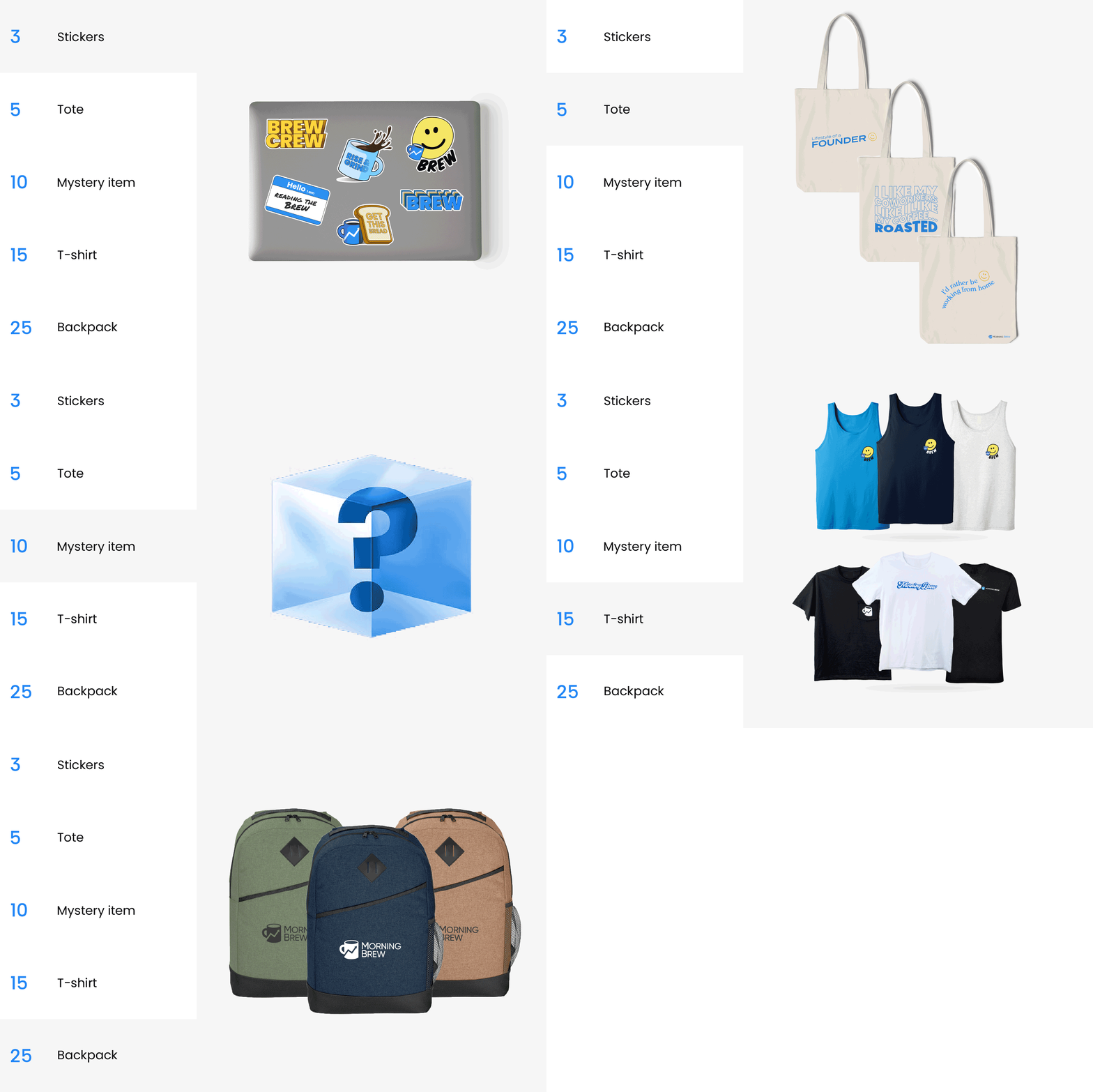
Your referral count: 2
Click to ShareOr copy & paste your referral link to others:
cfobrew.com/r/?kid=9ec4d467
|
|
ADVERTISE
//
CAREERS
//
SHOP
//
FAQ
Update your email preferences or unsubscribe
.
View our privacy policy
.
Copyright ©
2024
Morning Brew. All rights reserved.
22 W 19th St, 4th Floor, New York, NY 10011
|
|